
TL;DR
Safety consulting in Dallas Fort Worth covers everything from OSHA compliance and mock inspections to fractional safety directors and contractor prequalification. With DFW ranking as the top U.S. metro for construction job growth and OSHA penalties climbing to $16,550 per serious violation in 2025, understanding these terms is no longer optional. This glossary defines the key concepts DFW contractors encounter when hiring safety consultants, bidding on projects, or responding to OSHA activity.
Quick Takeaway: Why DFW Contractors Need Safety Consulting in 2026
Safety consulting in Dallas Fort Worth is a specialized service that helps contractors navigate OSHA compliance, manage bilingual workforce training, and maintain “A” grades on prequalification platforms like ISNetworld and Avetta. With 2026 OSHA penalties reaching $16,550 for serious violations and $165,514 for willful ones, hiring a consultant is a strategic financial move to avoid North Texas’s high enforcement risks, particularly in the booming construction sectors of Frisco, Fort Worth, and the DFW Airport expansion.
Why Safety Consulting Matters in the DFW Construction Market
The Dallas Fort Worth metroplex is building at a pace that few U.S. markets can match. Governor Greg Abbott highlighted DFW as the number one metro in the country for construction job growth in early 2024, and that trajectory has continued into 2025. Site Selection Magazine reported that DFW captured 489 corporate projects in 2024, representing 36% of Texas’s total. TxDOT alone has roughly $40 billion in projects underway or launching soon across roads, bridges, ports, waterways, railways, and airports. The DFW Airport Terminal F expansion is adding an entirely new terminal to handle growing passenger traffic.
All of that construction means more workers on more jobsites, more opportunities for something to go wrong, and more scrutiny from federal regulators. OSHA maintains both a Dallas Area Office and a Fort Worth Area Office, each with active enforcement programs and alliance agreements with groups like the Regional Black Contractors Association and the Regional Hispanic Contractors Association. This is not an agency that treats North Texas as an afterthought.
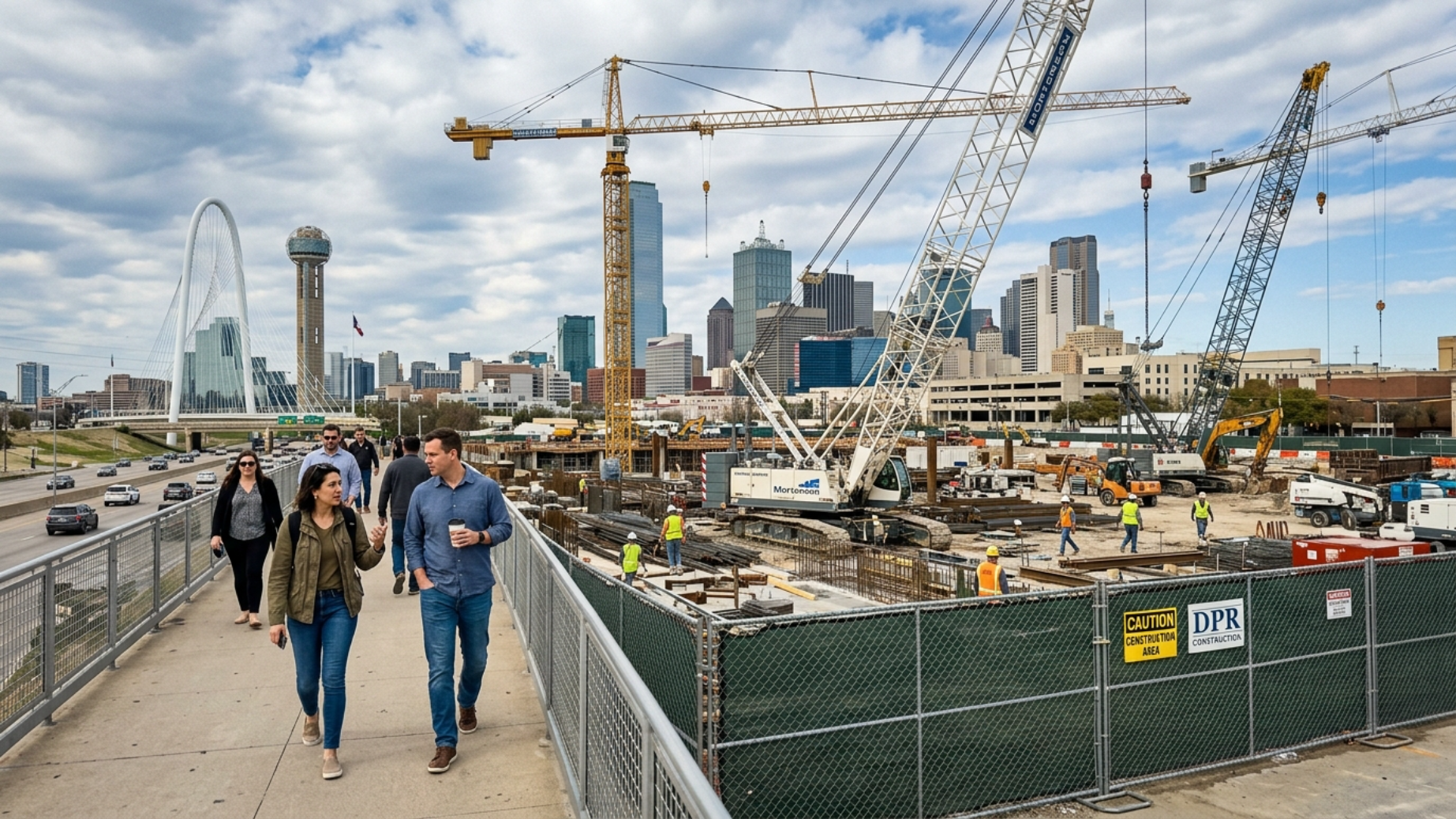
For contractors operating in this environment, safety consulting in Dallas Fort Worth has moved from a nice-to-have to a competitive necessity. The terms below are the ones you will encounter when hiring a consultant, qualifying for a GC’s bid list, or responding to an OSHA inspection. Knowing them puts you in a stronger position on all three fronts.
Engagement Models: How Safety Consulting Is Delivered
Safety Consulting
A safety consultant is an outside professional who brings specialized risk management experience, expertise, and training to help ensure your processes, operations, and equipment are as safe as possible. The word “outside” matters. An independent consultant acts as an unaffiliated third party whose only goal is the safety of your crew. That impartiality can expose blind spots your internal team doesn’t know exist.
In the DFW context, safety consulting typically includes site inspections, program development, training, OSHA compliance audits, and incident response. Some firms also provide expert witness testimony and prequalification support for platforms like ISNetworld and Avetta.

Safety Staffing
Safety staffing is distinct from consulting. Where consulting is advisory and project-based, staffing places a credentialed safety professional on your jobsite for days, weeks, or months. The person works embedded with your crew but is employed by the staffing firm.
DFW’s labor shortage makes this distinction especially relevant. Job postings from firms like CORE Safety Group list “multiple DFW area needs for construction safety professionals,” often requiring a minimum of three years’ experience plus an OSHA 30-Hour card or OSHA 510 credential. Qualified safety pros are hard to find, and a staffing partner can fill gaps faster than recruiting on your own. For a deeper look at the model, read this guide to hiring construction safety staff.
Fractional / Outsourced Safety Director
Not every contractor needs (or can afford) a full-time safety director. An outsourced safety consultant can manage your safety program at a fraction of the cost of a salaried hire. One industry source estimates the savings at one-quarter to one-third the total compensation of a full-time safety director.
The fractional model is especially popular among mid-size DFW subcontractors who have outgrown the “owner handles safety” stage but aren’t large enough to justify a six-figure safety salary plus benefits and ongoing training. You can learn more about the fractional safety director model to see whether it fits your operation.
Maintaining an internal safety department involves continuous expenses: salaries, benefits, training, software. Outsourcing lets you invest only in the services you actually need. Research suggests that for every dollar spent on effective safety measures, businesses can see savings of $2 to $6 through reduced incidents and claims.
On-Site Safety Professional
An on-site safety professional is a credentialed individual physically present on your jobsite to monitor hazards, enforce safety plans, and document compliance in real time. Many general contractors and project owners require this as a contract condition, particularly on large commercial, infrastructure, or institutional projects. For guidance on when this makes sense, see when to use on-site safety staffing.
Compliance and Regulatory Terms
OSHA Compliance
Texas does not have its own state OSHA plan for the private sector. Private-sector employers in Texas must follow regulations established by federal OSHA. This is a point of confusion for some contractors who assume Texas has its own workplace safety agency.
Federal OSHA sets the standards, conducts inspections, and issues citations. The Dallas and Fort Worth area offices handle enforcement for the DFW metro and surrounding counties. Compliance means meeting all applicable OSHA standards for your industry, maintaining required documentation, and training your workers on recognized hazards.
Mock OSHA Inspection
A mock OSHA inspection simulates what would happen if a compliance officer showed up at your facility or jobsite unannounced. A consultant walks your site using the same protocols OSHA uses, documents violations, and coaches your team on what to fix and how to handle an actual visit.
According to Berg Compliance Solutions, the typical construction OSHA inspection results in fines between $35,000 and $80,000, but often exceeds $100,000 for unprepared companies. A mock inspection that costs a few thousand dollars can prevent penalties that are orders of magnitude larger. ESR’s OSHA response consultant guide covers both preparation and post-inspection strategies.
OSHA Citations: 2026 Penalty Structure
As of January 2026, the Department of Labor has adjusted maximum civil penalties for inflation. These are the current figures that DFW area offices apply to citations:
Violation Type | 2026 Maximum Penalty |
Serious | $16,550 per violation |
Other-than-Serious | $16,550 per violation |
Willful or Repeated | $165,514 per violation |
Failure to Abate | $16,550 per day |
General Duty Clause
Section 5(a)(1) of the OSH Act, commonly called the General Duty Clause, requires employers to provide a workplace “free from recognized hazards that are causing or are likely to cause death or serious physical harm.” OSHA uses this clause to cite employers for hazards not covered by a specific standard. It is a catch-all, and it gives inspectors broad authority. A detailed explanation is available in this article on understanding the General Duty Clause.
OSHA 300 Log
The OSHA 300 Log is a form employers use to record work-related injuries and illnesses throughout the year. Most employers with more than 10 employees must maintain it. The log must be posted in a visible location from February 1 through April 30 each year (the OSHA 300A summary), and electronic submission requirements have been expanding to cover more employers and more data.
OSHCON: Texas’s Free Consultation Program
This is one of the most underused resources available to DFW contractors. The Occupational Safety and Health Consultation (OSHCON) program is a free, confidential service offered through the Texas Department of Insurance, Division of Workers’ Compensation. OSHCON is voluntary and non-regulatory. Consultants identify areas that don’t meet OSHA standards and offer solutions for correcting hazards. They do not issue citations or fines.
The key limitation: OSHCON identifies problems but does not build or manage your ongoing safety program. It is a snapshot, not a subscription. For contractors who need continuous compliance support, a private safety consultant fills the gap OSHCON leaves open.
Training and Credentials
OSHA 10-Hour / 30-Hour Training
The OSHA 10-Hour and 30-Hour courses are the most widely recognized construction safety training programs in the country. The 10-Hour course is designed for entry-level workers and covers basic hazard awareness. The 30-Hour course is intended for supervisors and workers with safety responsibility, going deeper into OSHA standards, hazard identification, and employer obligations.
In DFW, many GCs require an OSHA 10-Hour card as a minimum condition for site access. Some owner-controlled insurance programs (OCIPs) require 30-Hour cards for all supervisory personnel. Texas’s Division of Workers’ Compensation offers OSHA-authorized training in both English and Spanish, which matters enormously in DFW given the workforce demographics.
OSHA 500 / 501 (Trainer Authorization)
OSHA 500 authorizes a person to teach the OSHA 10-Hour and 30-Hour courses for the construction industry. OSHA 501 does the same for general industry. These are not beginner courses. Job listings for DFW safety positions frequently require “current OSHA 500 or 502” as a baseline credential. When evaluating a safety consulting firm, ask whether their trainers hold these authorizations. If they don’t, the training cards they issue won’t carry OSHA’s backing.
CSP, CHST, ASP
These are professional certifications issued by the Board of Certified Safety Professionals (BCSP):
CSP (Certified Safety Professional): The gold standard. Requires a bachelor’s degree, four years of safety experience, and a rigorous exam.
CHST (Construction Health and Safety Technician): Focused on construction. Requires three years of construction safety experience and passing an exam.
ASP (Associate Safety Professional): An intermediate credential on the path to CSP.
These certifications demonstrate competence to employers and project owners. When you see a safety consulting firm in Dallas Fort Worth listing CSP and CHST credentials on their team, it signals that their people have been vetted by an independent certification body, not just self-declared as experts.
NCCER (National Center for Construction Education and Research)
NCCER is a nonprofit that develops standardized construction and maintenance curricula. An NCCER Accredited Training Unit can deliver curriculum that results in nationally recognized, portable credentials for craft workers. This matters for safety training because NCCER modules cover topics like rigging, scaffold building, and confined space entry, all areas where poor training leads to serious injuries.
Bilingual Safety Training
Dallas Fort Worth’s construction workforce includes a large Spanish-speaking population. OSHA’s alliance with the Regional Hispanic Contractors Association and the Consulate of Mexico in Dallas reflects this reality. Texas’s Safety Violations Hotline is bilingual and operates 24 hours a day.
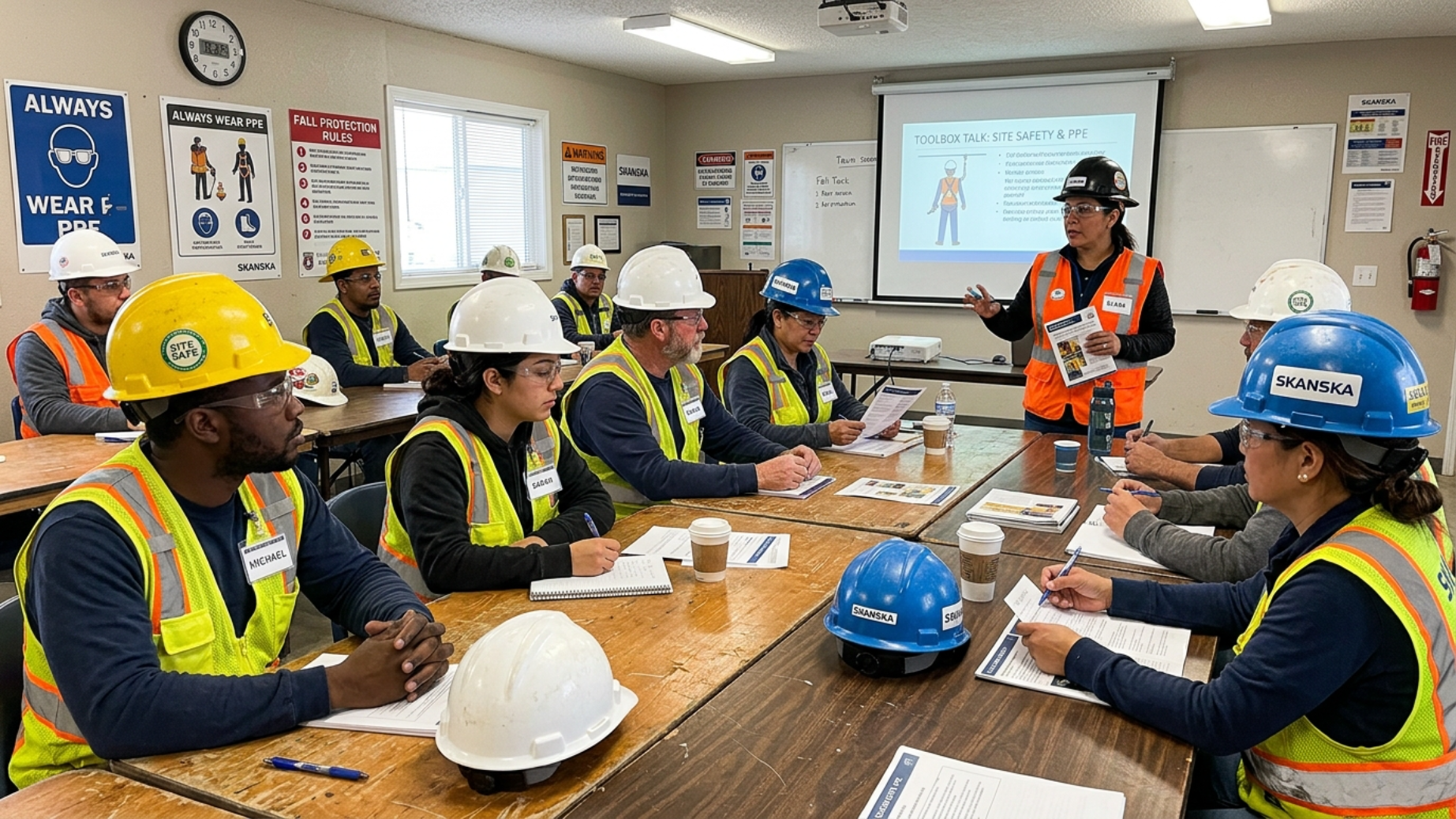
Training workers in a language they fully understand is not a courtesy; it is a compliance issue. OSHA expects employers to communicate hazard information in a manner workers can comprehend. A DFW safety consulting firm that offers bilingual English/Spanish training and field staff addresses this requirement directly.
Programs and Documents
Site-Specific Safety Plan (SSSP)
An SSSP is a written plan tailored to a particular project or jobsite. It covers the specific hazards, controls, emergency procedures, and responsibilities unique to that location. Most GCs in Dallas Fort Worth require subcontractors to submit an SSSP before mobilizing on site.
A generic safety plan won’t cut it. The SSSP should address the actual scope of work, the site conditions, nearby exposures, and the specific fall protection, excavation, or crane plans that apply. Safety consultants develop SSSPs as part of project-based engagements.
Activity Hazard Analysis (AHA)
An AHA breaks down a specific construction activity into individual steps, identifies the hazards associated with each step, and prescribes the controls needed to mitigate them. Think of it as a pre-task planning document. Many GCs and project owners require AHAs before each new phase of work begins.
For example, an AHA for steel erection would list steps like rigging, hoisting, connecting, and bolting, then identify fall hazards, struck-by hazards, and pinch points at each stage. The controls column would specify tie-off requirements, tag line protocols, and minimum clearance distances.
Safety Management System (SMS)
A safety management system is the organizational framework that ties all your safety efforts together: policies, procedures, training, hazard identification, incident investigation, and continuous improvement. It is the difference between having a binder of safety documents and actually managing safety as a business function.
ESR has published a multi-part series on this topic, starting with why your safety manual isn’t enough and continuing through assessments, documentation, and hazard control.
Written Safety Program / Safety Manual
Your written safety program is the foundational document that outlines your company’s safety policies, procedures, and responsibilities. OSHA requires written programs for specific hazards (hazard communication, respiratory protection, fall protection, etc.), and many GCs require a comprehensive manual as a condition of contract.
A common mistake: treating the manual as a one-time purchase that sits on a shelf. It needs to be reviewed, updated, and actually used. If you’re unsure whether yours measures up, this article on whether your safety manual is OSHA compliant is a good starting point.
Prequalification and Contractor Vetting
ISNetworld
ISNetworld is a contractor management platform used by over 900 hiring clients to vet and prequalify contractors and suppliers. To work with companies that use ISNetworld, you must purchase a subscription, upload your safety programs and documentation, maintain your EMR and OSHA logs, and achieve passing grades on the platform’s review criteria.
For many DFW subcontractors, ISNetworld compliance is the difference between winning and losing work. Failing to maintain your account, or scoring poorly on safety program reviews, can knock you off a qualified bidder list before the project even goes to bid.
Avetta
Avetta serves a similar function to ISNetworld but with a different client base and evaluation methodology. Some project owners use ISNetworld, some use Avetta, and some use both. The administrative burden of maintaining profiles on multiple platforms is a major pain point for mid-size contractors, and it’s one of the reasons firms seek safety consulting help in Dallas Fort Worth specifically for prequalification support.
Contractor Prequalification (Overview)
Contractor prequalification is the process by which project owners and GCs evaluate whether a subcontractor meets minimum safety, insurance, financial, and operational standards before being allowed to bid or work on a project. Programs like ISNetworld, Avetta, PEC Safety, and Veriforce have become standard gatekeepers.
To work with clients who use these platforms, contractors must invest in memberships and meticulously input their company information, a process that is crucial for securing contracts with major clients. A safety consultant can manage this process, ensure your documentation meets the platform’s requirements, and help you improve your scores over time.
Response and Investigation
Incident Investigation
When a workplace accident occurs, a safety consultant assists in investigating the incident to determine its root cause and implement corrective measures to prevent recurrence. This goes beyond filling out an injury report. A proper investigation includes witness interviews, scene documentation, timeline reconstruction, root cause analysis, and a corrective action plan.
In DFW’s active enforcement environment, a poorly documented incident can become the trigger for an OSHA inspection. Conversely, a thorough investigation that demonstrates good-faith efforts to identify and correct hazards can work in your favor if an inspector does show up.
OSHA Citation Response
Receiving an OSHA citation starts a clock. You have 15 working days to contest or the citation becomes a final order. The response process involves reviewing each cited item, gathering evidence, evaluating whether to contest or negotiate, and preparing your case. Many contractors don’t know they can request an informal conference with the OSHA area director to discuss the citation before the contest deadline.
A safety consultant experienced in citation response understands the procedural steps and the strategic options. For a walkthrough of the process, see the 4-step process every company should know after receiving an OSHA citation.
Expert Witness (Safety)
A safety expert witness is a credentialed professional who provides testimony in litigation involving workplace injuries, OSHA citations, or wrongful death claims. This can include depositions, written reports, and courtroom testimony. The expert’s role is to explain industry standards of care, evaluate whether safety practices were adequate, and offer opinions on causation.
DFW’s construction volume generates a proportional volume of disputes and litigation. Safety consulting firms that offer expert witness services provide continuity: the same firm that helped develop your safety program or investigated an incident can testify about the standards that apply.
Risk and ROI
Experience Modification Rate (EMR)
Your EMR (sometimes called an experience mod or XMOD) is a multiplier applied to your workers’ compensation premium. An EMR of 1.0 is the industry baseline. Below 1.0 means your loss history is better than average, and you pay less. Above 1.0 means you pay more.
Beyond insurance costs, your EMR affects your ability to win work. Many GCs in Dallas Fort Worth will not prequalify subcontractors with an EMR above 1.0. Some set the cutoff at 0.85. A strong safety program that reduces incidents directly lowers your EMR over time. For a deeper explanation of how this calculation works, read understanding experience modification rate.
Safety ROI
Safety is not just a cost center. Construction companies can save $4 to $6 for every $1 invested in an effective safety program by reducing additional fees, medical costs, and lost productivity. Nearly three-quarters of employers surveyed believe that health and safety requirements benefit their company as a whole, with 64% saying they save money in the long term.
The return shows up in lower insurance premiums, fewer lost workdays, better prequalification scores, and the ability to bid on projects that require strong safety credentials. For a framework to measure this in your own business, see evaluating safety’s return on investment.
Workers’ Compensation
Texas is unique among U.S. states in that workers’ compensation insurance is not mandatory for private employers. Employers can choose to be “non-subscribers.” However, non-subscribing employers lose certain legal protections and can be sued directly by injured employees. The majority of large contractors in DFW carry workers’ comp, and GCs almost universally require it from their subcontractors.
Your safety program directly influences your workers’ comp costs through the EMR mechanism described above. Fewer claims means a lower mod, which means lower premiums, which means more competitive bids.
Top OSHA Construction Violations: What DFW Contractors Face
Understanding the most frequently cited violations gives you a roadmap for where to focus your safety program. Fall protection has topped OSHA’s list for 14 consecutive years. In fiscal 2024, the duty to have fall protection alone generated 6,557 citations and $48 million in penalties.
The full top-10 list consistently includes:
Fall protection (general requirements)
Hazard communication
Ladders
Scaffolding
Fall protection (training)
Eye and face protection
Powered industrial trucks
Lockout/tagout
Respiratory protection
Machine guarding
For construction-specific firms in Dallas Fort Worth, fall protection, ladders, scaffolding, and trenching/excavation are the categories that generate the most citations and the highest penalties. OSHA investigated 826 worker deaths across all industries in fiscal 2024 (an 11% drop from the previous year), but the agency continues to prioritize construction enforcement.
2026 DFW Priority: The “Focus Four” Hazards
While the national list remains steady, the Dallas and Fort Worth Area Offices have identified four specific hazards as the highest priority for the 2026 construction season due to the region’s unique project types:
Heat Illness (Outdoor/Indoor): With North Texas summers trending hotter, OSHA is enforcing the 2024 heat standard strictly on DFW roofing and paving crews.
Trenching/Excavation: A major focus in Collin and Denton counties as new utility infrastructure follows the residential boom.
Struck-By Hazards: Critical for contractors working on the TxDOT $40B project pipeline and the DFW Terminal F expansion.
Fall Protection: Remains the #1 cited violation in the DFW metroplex.
DFW-Specific Resources Worth Knowing
TEXO Association
TEXO is the largest commercial contractors association in North Texas. Their safety staff is available to act as an extension of your company’s safety department and help your team adhere to the latest regulations and standards on the jobsite. This is a free resource for TEXO members and worth exploring before or alongside engaging a private consultant.
OSHA Alliance Agreements
OSHA’s Dallas and Fort Worth offices maintain alliance agreements with several DFW-based organizations, including the Regional Hispanic Contractors Association and the Regional Black Contractors Association. These alliances produce training materials, outreach events, and compliance assistance resources tailored to the DFW construction community.
Choosing a DFW Safety Consulting Partner
When evaluating safety consulting firms in Dallas Fort Worth, look beyond the marketing and ask specific questions:
Credentials: Does the firm employ professionals with CSP, CHST, OSHA 500/501, or NCCER instructor certifications? These are verifiable through the issuing bodies.
Local presence: A firm with a physical office in the DFW metro can respond faster and won’t tack travel surcharges onto every visit. Ask about their service radius and whether travel costs are included.
Bilingual capability: If your field crews include Spanish-speaking workers, your consultant needs to communicate with them directly, not through a foreman acting as translator.
Scope of services: Can the firm handle everything from program development to on-site staffing to incident investigation to expert witness? Or will you need to engage multiple vendors?
Speed: When you need a safety professional on site for a project that starts Monday, response time matters. Ask about average placement timelines for staffing requests.
ESR maintains an office in Allen, TX that covers the DFW metro. The team includes CSP, CHST, OSHA 500/501, and NCCER-credentialed professionals with bilingual English/Spanish capability. If you need help evaluating your current safety program, see the full benefits checklist for outsourcing your safety department or request a safety professional through ESR’s staffing service.
Frequently Asked Questions
What does a safety consultant do on a construction site in Dallas Fort Worth?
A safety consultant inspects the jobsite for hazards, reviews your written safety programs, trains workers on OSHA-required topics, conducts mock inspections, investigates incidents, and helps you respond to OSHA citations. On larger DFW projects, they may also provide full-time on-site safety staffing or manage your entire safety program as a fractional safety director.
How much do OSHA fines cost in 2025?
As of January 15, 2025, the maximum penalty for a serious violation is $16,550. Willful or repeated violations can reach $165,514 each. In practice, a typical construction inspection at an unprepared company results in fines between $35,000 and $80,000, and they often exceed $100,000.
Does Texas have its own OSHA program?
No. Texas does not operate a state OSHA plan for private-sector employers. Federal OSHA has direct jurisdiction. OSHA maintains both a Dallas Area Office and a Fort Worth Area Office for enforcement in North Texas.
What is OSHCON, and should I use it instead of a private safety consultant?
OSHCON is a free, confidential consultation program run by the Texas Department of Insurance. It helps identify hazards and areas of non-compliance, but it does not build or manage your safety program. Think of OSHCON as a diagnostic tool and a private safety consultant as the ongoing treatment plan. Using both is a smart strategy.
What credentials should I look for when hiring a DFW safety consultant?
At minimum, look for OSHA 500 or 501 (trainer authorization) and a professional certification like CSP or CHST from the Board of Certified Safety Professionals. For firms providing NCCER training, verify they are an NCCER Accredited Training Unit. Bilingual English/Spanish capability is important for DFW construction sites.
What is the difference between safety consulting and safety staffing?
Safety consulting is advisory and project-based: inspections, program development, training, audits, citation response. Safety staffing places a credentialed safety professional on your jobsite for a defined period, working alongside your crew on a daily basis. Many firms in DFW offer both, and the right choice depends on whether you need strategic guidance or day-to-day coverage.
Why is contractor prequalification through ISNetworld or Avetta so important in DFW?
Major GCs and project owners in Dallas Fort Worth use ISNetworld and Avetta to screen subcontractors before allowing them to bid. If your safety programs, EMR, OSHA logs, and training records don’t meet the platform’s thresholds, you won’t make the qualified bidder list. In a market with 489 corporate projects in a single year, losing prequalification access means losing revenue.
How fast can I get a safety professional on my DFW jobsite?
It depends on the provider. Some staffing firms take weeks to fill a position given the tight supply of qualified safety professionals in North Texas. ESR advertises a 48-hour average placement and covers the DFW metro from their Allen, TX office with no travel surcharge within 50 miles. If you have an urgent need, explore ESR’s emergency safety staffing options.
Fact Check & Review: This glossary is updated for May 2026 regulatory standards. All penalty data and DFW market statistics have been verified against 2026 Department of Labor (DOL) and Site Selection Magazine reports to ensure accuracy for North Texas contractors and safety professionals.