
TLDR
An outsourced safety director is an external safety professional or team that manages your company’s safety program on a contract or fractional basis instead of serving as a full-time employee. The role covers inspections, training, written programs, OSHA records, incident response, and leadership reporting. It works best when your company has real safety risk but not enough workload or budget to justify a permanent senior safety hire. The employer still retains all OSHA duties regardless of who manages the safety program day to day.
What is an Outsourced Safety Director?
An outsourced safety director is a contract or fractional professional who manages a company’s safety program, compliance, and leadership duties without being a full-time employee. In 2026, this model allows firms to access senior-level safety expertise for inspections, training, and OSHA recordkeeping at a fraction of the cost of a permanent executive hire.
Outsourced Safety Director: Definition
An outsourced safety director is an external safety leader who takes ownership of a company’s safety function on an ongoing, contract, or fractional basis. Unlike a one-time consultant who delivers a report and moves on, an outsourced safety director typically manages recurring safety leadership: building written programs, inspecting jobsites or facilities, coordinating training, maintaining OSHA records, investigating incidents, tracking corrective actions, and reporting to company leadership.
In plain terms, it means you access experienced safety leadership when you need it, instead of hiring a full-time safety director before your workload, risk level, or budget justifies one.
This arrangement goes by several names. You will see “fractional safety manager,” “contract safety director,” and “outsourced safety department” used in overlapping ways. The core idea is the same: a company gets professional safety management without adding a permanent executive to payroll.
One critical point that gets glossed over too often: outsourcing safety work does not outsource the employer’s legal responsibility. OSHA’s General Duty Clause requires each employer to furnish a workplace free from recognized hazards likely to cause death or serious physical harm and to comply with applicable OSHA standards (OSHA Section 5). You can outsource safety execution. You cannot outsource the duty itself.
Why the Demand for Outsourced Safety Directors Is Growing
Several forces are pushing more companies toward this model.
Safety talent is hard to find. The Bureau of Labor Statistics projects employment of occupational health and safety specialists and technicians to grow 12% from 2024 to 2034, much faster than average, with roughly 18,300 openings per year (BLS OOH). That kind of demand makes recruiting competitive, especially for smaller companies competing against larger firms with bigger budgets.
Full-time safety directors are expensive. BLS reported a May 2024 median annual wage of $83,910 for occupational health and safety specialists, with construction specialists at $84,890 and the top 10% earning more than $130,000. Director-level roles cost even more. One LinkedIn posting for a construction safety manager showed a base pay range of $131,960 to $205,330. When you add benefits, recruiting costs, and onboarding time, a senior safety hire represents a major commitment.
Project workload fluctuates. A LinkedIn practitioner from Intuitive Safety Solutions described fractional EHS as a growing “middle ground” for construction, energy transition, data centers, manufacturing, and industrial work because project scope ramps up and slows down (LinkedIn). The need for safety expertise does not disappear when workload dips, but the right staffing level changes.
The cost of getting safety wrong is high. The National Safety Council estimated the 2024 cost per medically consulted workplace injury at $48,000 and the cost per death at $1,540,000 (NSC Injury Facts). Private industry employers reported 2.5 million nonfatal workplace injuries and illnesses in 2024 (BLS SOII). Construction and extraction workers experienced 1,032 fatalities that same year, with 370 fatal falls, slips, and trips (BLS CFOI). These are not abstract numbers. They are documentation burdens, prequalification problems, OSHA exposure, and leadership distraction.
The real framing is not that outsourcing is “cheaper.” It is that outsourcing gives companies access to senior safety capability before they are ready for a full-time senior hire.
Cost Analysis: Outsourced vs. Full-Time Safety Director (2026 Data)
Metric | Full-Time Senior Hire | Outsourced Safety Director |
Median Annual Base | $131,960 – $205,330+ | $36,000 – $75,000 (Retainer) |
Benefits/Taxes | +30% of salary | Included in fee |
Onboarding Time | 3–6 months | 48 hours to 2 weeks |
Scalability | Fixed headcount | Scales with project volume |
Expertise Access | Single professional | Full team of CSP/CHST specialists |
ROI Trigger | High volume, static risk | Fluctuating risk & project starts |
2026 Regulatory Drivers for Outsourcing
Heat Stress Standard Enforcement: OSHA’s federal heat rule is now in full effect. Outsourced directors provide the specialized monitoring and training required to avoid high-gravity citations.
AI in Safety Monitoring: Fractional directors are increasingly used to implement and oversee AI-driven camera systems and wearables on jobsites.
Increased “Instance-by-Instance” Citations: OSHA has expanded its ability to issue separate fines for each individual violation, making professional oversight a financial necessity.
What Does an Outsourced Safety Director Actually Do?
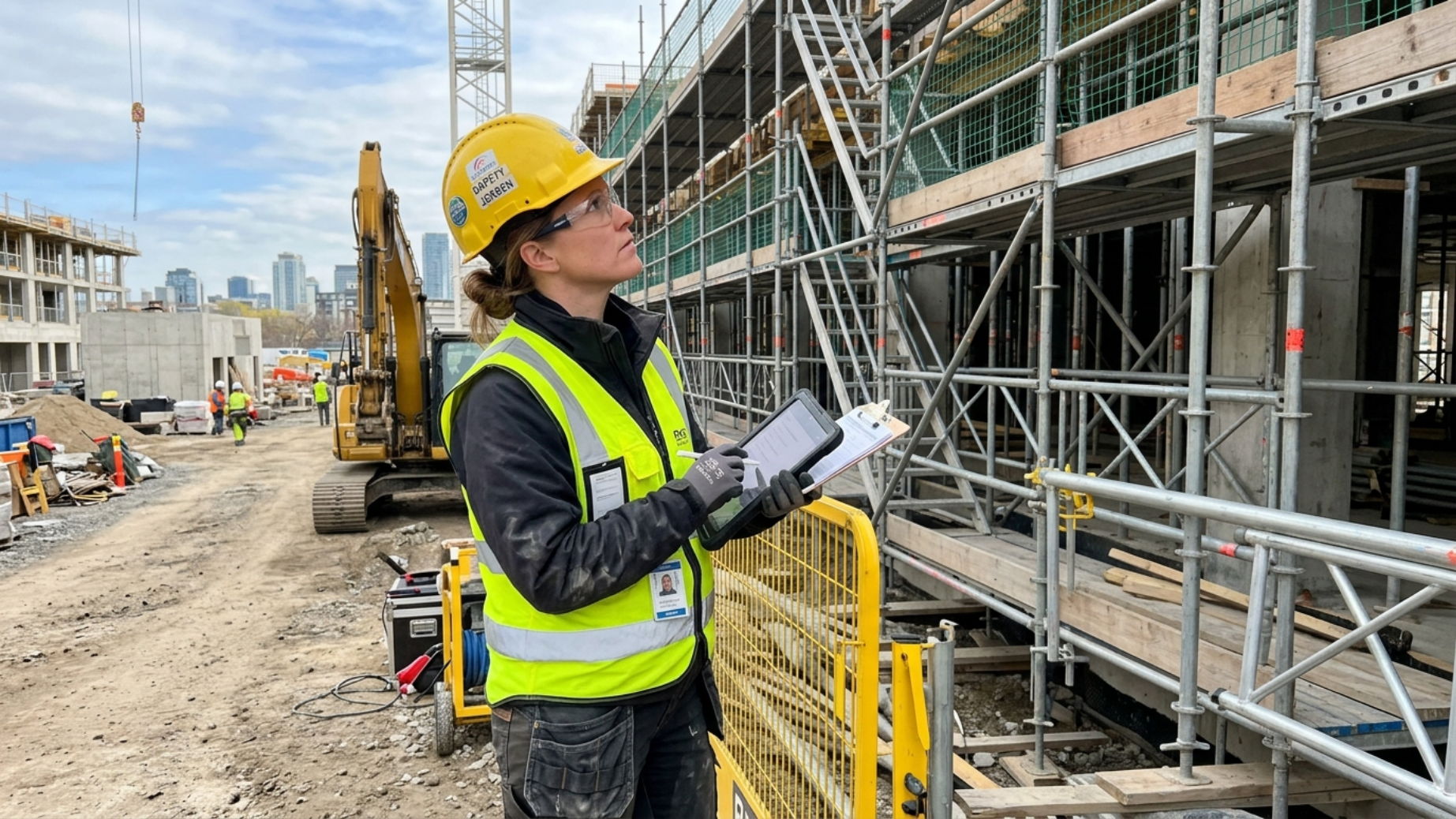
The scope varies by company size, industry, and risk profile. But an outsourced safety director typically handles:
Safety program leadership. Build, update, and maintain written safety programs, standard operating procedures, and company policies. If your current safety manual needs an OSHA compliance review, this is usually one of the first deliverables.
Jobsite and facility inspections. Identify hazards, document findings, assign corrective actions, and verify closure.
Training coordination. Deliver or schedule OSHA-required training and task-specific safety training for field crews and supervisors.
Incident investigation. Determine root causes, preserve evidence, write reports, and track corrective actions through completion.
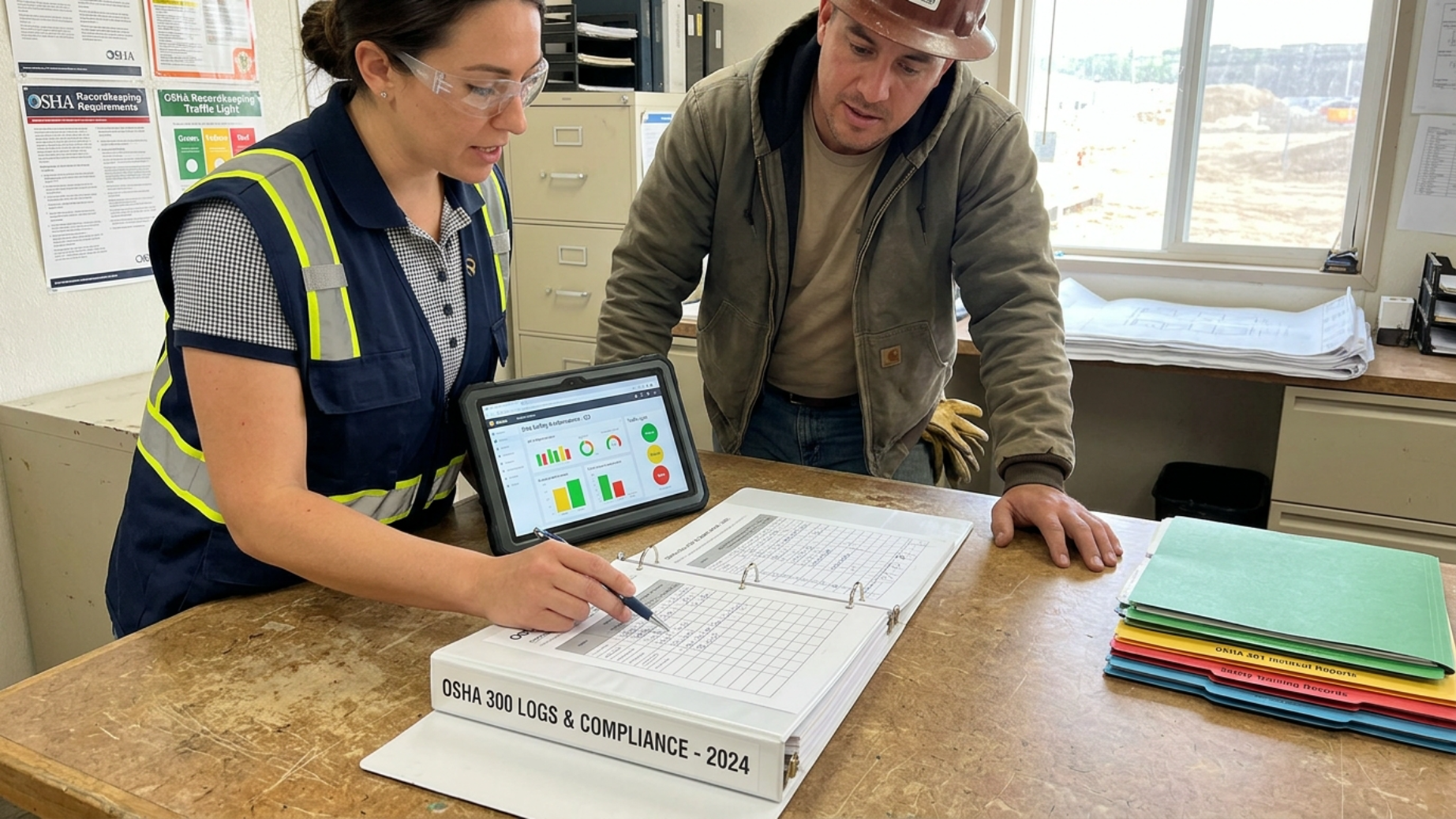
OSHA recordkeeping. Maintain OSHA 300/300A/301 logs when required. Many employers with 10 or more employees must keep records of occupational injuries and illnesses (OSHA Recordkeeping).
OSHA inspection and citation support. Prepare documentation, coach the employer during inspections, and help respond to citations. If you have already received a citation, there is a four-step process every company should know.
Severe injury and fatality reporting. Employers must report a work-related fatality to OSHA within 8 hours and a work-related in-patient hospitalization, amputation, or loss of an eye within 24 hours (29 CFR 1904.39). Getting this wrong creates compounding problems.
Prequalification support. Help prepare safety documentation for ISNetworld, Avetta, and owner/GC systems.
Site-specific safety plans, JHAs, and AHAs. Develop hazard analyses and task-specific plans for field work.
Management coaching. Help owners, executives, project managers, superintendents, and foremen understand and act on their safety responsibilities.
Leading indicator tracking. Monitor audits, near misses, corrective action closure, training completion, and supervisor participation.
OSHA says effective safety and health programs need three basic elements: management leadership, worker participation, and a systematic approach to finding and fixing hazards (OSHA Step-by-Step Guide). A good outsourced safety director does not just write policies. They help leadership lead, workers participate, and hazards get found and fixed. That is the difference between a safety manual sitting on a shelf and a management system that actually changes outcomes.
Outsourced Safety Director vs. Safety Consultant vs. Safety Staffing
Most companies searching for safety help encounter overlapping terms. Here is how the main models differ.
Safety Consultant
An outside expert who assesses, advises, trains, audits, investigates, or writes programs for a specific engagement. Best for filling a defined gap: a mock OSHA inspection, a safety manual rewrite, an incident investigation. The limitation is that a consultant may not own day-to-day safety leadership. They solve a problem and hand it back.
Safety Staffing
Temporary, contract, or long-term placement of a safety professional on a project or site. Best for on-site coverage when an owner or GC requires a dedicated safety person, or during project surges and shutdowns. The limitation is that the person may cover the site but not lead the companywide safety system.
Fractional Safety Manager
A part-time safety leader for set hours per week or month. Best for small and mid-sized businesses that need recurring support but cannot justify full-time headcount. The limitation is that the model can become too tactical if the person is not backed by a broader team or does not have authority within the organization.
Outsourced Safety Director
An external safety leader or team that manages the safety function on an ongoing basis. Best for companies needing safety leadership, compliance systems, field execution, and executive guidance rolled into one. The limitation is that the model requires clear authority, a communication cadence, and buy-in from company leadership to succeed.
Outsourced Safety Department
A broader provider model with director-level leadership plus trainers, inspectors, program writers, staffing, and specialists. Best for companies without any internal safety infrastructure or with multi-location needs. The limitation is that scope must be clearly defined, or operational leaders start treating safety as “someone else’s job.”
The key distinction: a consultant advises, staffing fills a seat, and an outsourced safety director owns the function. Several firms position themselves along this spectrum. OccuPros, for example, frames their outsourced safety director role as ongoing leadership rather than a consultant who visits once and leaves a binder. Safety Resources uses the phrase “Contract Safety Director” and describes providing a company with a safety department of professionals across loss control and risk management disciplines.
When Should a Company Use an Outsourced Safety Director?
Strong Triggers
Safety is somebody’s side job. If safety is assigned to HR, an operations manager, a superintendent, or a project manager who already has a full plate, the function is vulnerable. Practitioners on Reddit emphasize that consultants add the most value when a company knows it has gaps but cannot justify a full-time safety manager yet. As one commenter put it, the hard part is not writing documents; it is building positive culture, getting financial support, and implementing changes.
Multiple jobsites or facilities. Outsourced support can scale inspection, training, and documentation across locations without creating a full internal department.
You need fast project safety coverage. Some companies need a credentialed safety professional on a jobsite within days, not weeks.
Bids and prequalification require safety documentation. Written programs, EMR/TRIR/DART history, ISNetworld or Avetta profiles, and site-specific safety plans are table stakes for many owner/GC relationships.
There has been a serious incident, OSHA inspection, citation, or owner/GC audit finding. These events demand immediate, knowledgeable response. As of January 2026, the maximum fine for a Serious violation is $16,550 (up from ~$16,131) can reach $16,550 per serious violation and $165,514 per willful or repeated violation.
Spanish-speaking crews need safety communication in their language. This is not a marketing checkbox. CPWR reported that Hispanic workers’ share of the construction workforce doubled from 16.5% in 2000 to 34.0% in 2023 (CPWR). NIOSH reported that fatal injuries among Hispanic construction workers rose about 90% from 2011 to 2019, outpacing their employment growth (NIOSH). Practitioners on Reddit have noted that bilingual safety meetings are common on large jobsites and that instructions fail when workers do not understand them. One commenter argued that language barriers often point back to management systems, not just worker behavior.
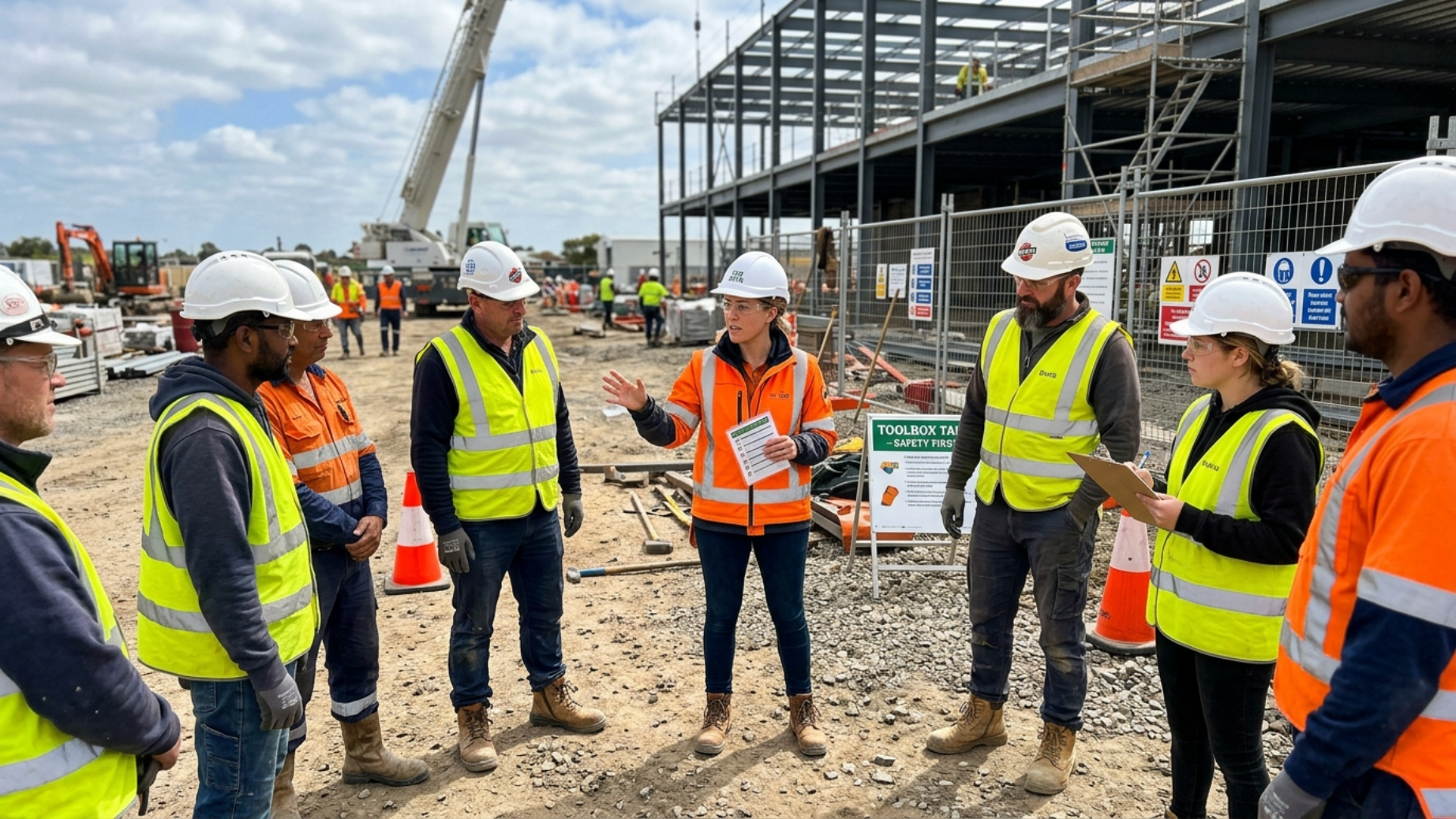
You cannot attract or afford a senior full-time safety leader. If the salary data and job postings above made you pause, outsourcing might bridge the gap.
You are growing faster than your safety infrastructure. Revenue growth without safety infrastructure growth is a recipe for incidents, OSHA exposure, and prequalification failures.
A construction subcontractor on Reddit described weighing a full-time safety professional against consultant support, noting consultant rates around $60 to $100 per hour and wondering whether a consultant could build training and compliance programs or stay on retainer for recurring hours. Another commenter pointed out that a consultant may bring more knowledge and training than a superintendent assigned safety duties, at a fraction of full-time cost.
If your alternative is assigning safety to a busy superintendent, outsourced safety leadership is likely more realistic than waiting until you can hire a full-time safety director.
If you need safety staffing or field safety services quickly, ESR provides nationwide safety staffing with a 48-hour average placement promise.
When Outsourcing Is Not Enough
Outsourcing is not always the right answer, and a trustworthy page should say so.
A contract requires full-time dedicated on-site safety coverage. In that case, you need safety staffing or a full-time hire, not just a fractional director who visits periodically.
Leadership will not enforce safety decisions. An outsourced safety director can identify hazards and build systems, but if supervisors ignore corrective actions and leadership does not back enforcement, the program will not work. Practitioners on Reddit discussed how gaps between written expectations and actual field behavior can turn into willful-fine exposure if crews are informally expected to keep working with unsafe tools or conditions.
The provider lacks your industry experience. Construction, utilities, manufacturing, life sciences, and telecom have different hazards, documentation expectations, and field rhythms. A manufacturing EHS consultant may struggle on a multi-employer construction site.
You want to outsource liability. This is the wrong mindset. OSHA duties remain with the employer, period.
You want a binder, not behavior change. Documentation is necessary but does not replace hazard recognition, evaluation, and control.
Your operation is large enough for a permanent internal safety executive. Once the safety workload is daily, the organizational complexity is high, and internal coordination is constant, a full-time hire makes more sense.
Three Levels of Outsourced Safety Support
Not every company needs the same level of outside safety help. Think of it as a ladder.
Level 1: Task Support
One inspection. One written program. One training class. One incident investigation. This is traditional consulting, and it is appropriate when you have a specific, bounded need.
Level 2: Project Support
A safety professional assigned to a jobsite, shutdown, high-risk phase, or owner-required project. This is safety staffing, and it solves a coverage problem for a defined period.
Level 3: Program Leadership
An outsourced safety director or outsourced safety department that manages the safety system over time. This is where ongoing accountability lives: recurring inspections, leadership reporting, corrective action tracking, training calendars, OSHA log management, and executive coaching.
Understanding where your company falls on this ladder helps you buy the right service. Many companies start at Level 1, realize they need more, and eventually move to Level 3.
The Authority, Cadence, and Evidence Test
Before hiring an outsourced safety director, make sure the operating model answers three questions.
Authority. Can this person stop work, require corrections, escalate hazards, and hold supervisors accountable? Without real authority, the role becomes advisory in name but toothless in practice.
Cadence. How often will they inspect, meet leadership, train crews, review logs, and report progress? Safety is not a quarterly check-in. Define the rhythm in the agreement.
Evidence. What records will prove the safety program is functioning? Inspection reports, training rosters, corrective action logs, OSHA logs, JHAs/AHAs, toolbox talks, and incident reports. If the outsourced safety director cannot show evidence that the system is running, there is no way to know whether it is. For more on how assessments, audits, and continuous improvement fit into a safety management system, that link provides useful context.
What Credentials Should an Outsourced Safety Director Have?
Credentials matter. But they are not the whole picture.
CSP (Certified Safety Professional). This is a senior safety credential requiring at minimum a bachelor’s degree, four years of qualifying safety experience, a BCSP qualified credential, and passing the CSP exam (BCSP CSP). Appropriate for broad safety leadership roles.
CHST (Construction Health and Safety Technician). Designed for professionals with at least 35% of duties in construction safety, requiring three years of construction safety experience and exam passage (BCSP CHST). Especially relevant for construction-focused outsourced safety director roles.
OSHA 500/501. These certify the person as an authorized OSHA outreach trainer. Important when training delivery is part of the scope.
OSHA 30 alone is not a director-level qualification. An OSHA 30-hour card demonstrates basic safety awareness. It does not equip someone to lead a safety program.
Industry-specific experience matters as much as initials. Practitioners on Reddit stress that the most important competency is hazard recognition and knowing how to find, interpret, and apply the correct OSHA, ANSI, NIOSH, or ACGIH guidance, not memorizing every standard number. Field judgment, practical communication skills, and the ability to earn trust with crews count.
Bilingual capability matters when crews need Spanish-language training and field communication. Given the construction workforce demographics discussed earlier, this is not a nice-to-have on many jobsites. It is essential for effective toolbox talks, pre-task planning, and incident prevention.
What to Include in an Outsourced Safety Director Agreement
This is where most buyers go in underprepared. A solid agreement should cover:
Scope of services (what is included, what is not)
Site and facility coverage
Visit frequency and minimum hours
Response time for incidents and urgent calls
Reporting cadence to leadership
Training responsibilities and delivery schedule
Incident response expectations
OSHA inspection support (what happens when OSHA shows up)
Stop-work and escalation authority
Documentation ownership (who keeps the records)
Confidentiality
Deliverables with defined timelines
KPIs for evaluating performance
Renewal or cancellation terms
Whether staffing can scale up for projects
The more specific the agreement, the less room for the kind of ambiguity that causes outsourced safety relationships to fail.
The First 90 Days: What an Outsourced Safety Director Should Do After Signing
Few companies explain what happens after the contract is signed. Here is what a structured onboarding looks like.
Days 1 to 30: Discover and Stabilize
Review OSHA logs, written programs, training records, incident history, and EMR/TRIR/DART data. Walk key jobsites or facilities. Identify high-risk exposures. Build a corrective action list. Clarify reporting lines and stop-work authority. Prioritize urgent compliance gaps.
Days 31 to 60: Build the System
Update written programs. Launch an inspection cadence. Train supervisors on hazard recognition and documentation. Standardize toolbox talks, JHAs/AHAs, and pre-task planning. Create an OSHA reporting and incident response procedure. Begin leadership reporting.
Days 61 to 90: Drive Accountability
Track corrective action closure rates. Review leading indicators. Coach supervisors on field enforcement. Prepare for owner/GC audits or prequalification. Adjust the staffing and training plan based on what the first two months revealed. Present an executive safety roadmap.
This timeline is not theoretical. It reflects how experienced safety professionals approach a new engagement: assess first, build systems second, enforce accountability third.
How to Measure Whether an Outsourced Safety Director Is Working
You need both leading and lagging indicators to get a complete picture.
Leading Indicators
These tell you whether the system is functioning before something goes wrong.
Completed inspections on schedule
Corrective action closure rate and speed
Training completion percentages
Toolbox talk and pre-task planning participation
JHA/AHA completion quality
Near-miss reporting volume (more reports usually means better culture, not worse safety)
Supervisor safety observations
Audit findings trending down over time
Lagging Indicators
These measure outcomes after the fact.
Total Recordable Incident Rate (TRIR)
Days Away, Restricted, or Transferred (DART)
Lost-time injuries
Workers’ compensation claims
Experience Modification Rate (EMR)
OSHA citations
Owner/GC audit failures
Private industry’s total recordable case rate was 2.3 per 100 full-time equivalent workers in 2024 (BLS SOII). Over 2023 to 2024, private industry saw 1.8 million cases involving days away from work, with a median of 8 days away. Understanding where your numbers fall relative to your industry helps you set realistic goals. For a deeper look at evaluating safety’s return on investment, that analysis provides a practical framework.
Example: Outsourced Safety Director in Construction
Consider a specialty subcontractor with 80 field employees, three active jobsites, Spanish-speaking crews, and new GC prequalification requirements. Safety has been handled by a project manager and a superintendent, both of whom are already stretched.
An outsourced safety director starts with a program review. They update the safety manual, build a site inspection schedule, train supervisors on JHAs, provide bilingual toolbox talks, review OSHA recordkeeping, and prepare the company for owner and GC audits. Over time, they establish a cadence of monthly leadership reports, weekly site visits, and quarterly training refreshers.
The PM and superintendent still participate in safety. But now there is a system, someone is accountable for running it, and the company has documentation that holds up under scrutiny.
This is also where multi-employer worksite exposure matters. OSHA’s Multi-Employer Citation Policy evaluates the roles of creating, exposing, correcting, and controlling employers on shared worksites (OSHA CPL 02-00-124). An outsourced safety director working in construction should understand this framework because subcontractors can be cited for hazards they did not create.
Small contractors face disproportionate risk. NIOSH reported that small employers with fewer than 20 employees accounted for 75% of fatal falls from 2015 to 2017 while representing only 39% of construction payroll employment (NIOSH). These are exactly the companies that benefit most from outsourced safety leadership.
A Note on “Competent Person” Requirements
An outsourced safety director is not automatically the “competent person” for every task on a jobsite. OSHA defines a competent person as one capable of identifying existing and predictable hazards and authorized to take prompt corrective measures (OSHA). Competent person duties must be assigned based on the specific OSHA standard, the person’s knowledge, and their authority to correct hazards on the spot.
This distinction matters because some companies assume that hiring any outside safety professional checks every compliance box. It does not. The outsourced safety director can help identify who needs to be designated as a competent person for excavation, scaffolding, fall protection, and other standards, but the designation itself is the employer’s responsibility.
How ESR Supports Outsourced Safety Director Needs
Evolution Safety Resources is a hybrid consulting and staffing firm that helps companies move from “someone is handling safety on the side” to “we have an accountable safety function.”
ESR provides fractional and outsourced safety department support for companies without an internal safety leader, full safety program management for companies that want ESR to own the safety function, project consulting for single engagements, and nationwide safety staffing with a 48-hour average placement promise.
ESR’s team includes professionals credentialed as CSP, CHST, OSHA 500/501, NCCER instructors, and MS-OSH. The firm has bilingual English/Spanish field and training staff. ESR provides local consulting within 50 miles of its offices in Raleigh, Charlotte, Wilmington, Alexandria, and Allen with no additional travel charge.
Services span prevention, ongoing field support, post-incident response, OSHA citation response, investigations, and expert witness work.
Need safety leadership without waiting months to hire? Request a Safety Pro.
Not sure whether you need a consultant, on-site safety staffing, or a fractional safety director? ESR can help scope the right level of support. Start with a jobsite safety inspection or mock OSHA inspection to identify where you stand.
2026 Safety Management Glossary
Quickly navigate the essential terms used in safety outsourcing and compliance.
Fractional Safety Manager: A part-time safety leader assigned for specific recurring hours, ideal for small to mid-sized businesses.
Contract Safety Director: An outsourced professional who provides senior-level safety leadership without an employment contract.
Safety Staffing: The rapid placement of a safety professional on a specific project or site for a defined duration.
EHS Consultant: An Environmental, Health, and Safety advisor typically focused on specific audits or technical industrial projects.
TRIR & DART: Lagging metrics derived from OSHA 300 logs used to measure incident frequency (Total Recordable Incident Rate) and severity (Days Away, Restricted, or Transferred).
EMR (Experience Modification Rate): An insurance metric that compares your workers’ compensation claims history to your industry average.
ISNetworld / Avetta: Global platforms used by GCs and Owners to prequalify contractors based on safety performance.
JHA / AHA: Proactive risk assessments (Job Hazard Analysis and Activity Hazard Analysis) performed before starting high-risk tasks.
Frequently Asked Questions
Is an outsourced safety director the same as a safety consultant?
No. A safety consultant typically completes a specific project, such as an audit, training class, safety manual, or incident investigation. An outsourced safety director provides ongoing leadership and recurring accountability for the safety program over time.
Can an outsourced safety director replace a full-time safety director?
Sometimes. It works best when the company needs professional safety leadership but does not yet need 40 or more hours per week of internal safety management. It may not replace a full-time hire if a contract requires dedicated daily site safety coverage or if the company is large and complex enough to need permanent internal leadership.
Does outsourcing safety transfer OSHA responsibility?
No. The employer remains responsible for OSHA compliance and for providing a safe workplace. OSHA’s General Duty Clause places that duty on each employer (OSHA Section 5). An outsourced safety director can manage the program, but the legal obligation stays with the company.
What credentials should an outsourced safety director have?
Relevant credentials include CSP, CHST, OSHA 500/501, and industry-specific training or certifications. CSP is a senior credential requiring education, experience, and exam passage. CHST is especially relevant for construction. Beyond credentials, look for field judgment, hazard recognition skills, and practical communication ability.
How much does an outsourced safety director cost?
Cost depends on hours per month, number of jobsites or facilities, travel, industry risk level, training volume, documentation backlog, incident response needs, and whether on-site staffing is included. For context, BLS reported a May 2024 median wage of $83,910 for safety specialists, with construction at $84,890 and the top 10% above $130,460 (BLS OOH). An outsourced arrangement can provide senior-level expertise at a fraction of full-time salary and benefits, scaled to actual need.
What industries use outsourced safety directors?
Construction (general contractors and specialty subcontractors), utilities, power generation, telecommunications, manufacturing, industrial facilities, municipalities, healthcare and life sciences facilities, and companies with project-based or multi-site risk. Any industry with OSHA exposure and variable workload is a candidate.
What should an outsourced safety director review first?
OSHA logs, written programs, training records, jobsite inspection history, incident history, workers’ comp and EMR trends, prequalification gaps, high-risk tasks, supervisor safety responsibilities, and existing JHA/AHA and toolbox talk processes. The first 30 days should focus on assessment and stabilization before building new systems.
When should I hire full-time instead of outsourcing?
Hire full-time when the safety workload is daily and permanent, when internal coordination requires constant presence, when multiple projects need simultaneous dedicated coverage, or when the organization is large enough that safety leadership needs to sit at the executive table with full-time authority and internal political capital.