TL;DR
A mock OSHA inspection is a voluntary, privately commissioned safety evaluation that simulates a real OSHA compliance inspection without the risk of citations or fines. Charlotte employers face a unique enforcement environment because North Carolina operates its own OSHA-approved state plan with a dedicated Charlotte field office. With serious violations carrying penalties up to $16,550 each and willful violations reaching $165,514, a mock inspection is one of the most cost-effective ways to find and fix hazards before an inspector does.
Looking for a mock OSHA inspection in Charlotte? Request a Safety Pro from ESR’s local Charlotte office.
Quick Takeaway: What is a Mock OSHA Inspection?
A mock OSHA inspection is a proactive, voluntary safety audit that simulates an official compliance inspection to identify workplace hazards, training gaps, and documentation errors. Because it is conducted by a private consultant, it carries zero risk of citations or monetary penalties.
For businesses in Charlotte, NC, this evaluation provides a safe testing ground to ensure full compliance with the North Carolina Department of Labor (NCDOL) Occupational Safety and Health (OSH) Division standards before an enforcement officer arrives.
What Is a Mock OSHA Inspection?
A mock OSHA inspection (also called a simulated OSHA inspection, pre-OSHA inspection, OSHA mock audit, courtesy inspection, or comprehensive safety evaluation) is a voluntary safety assessment conducted by a qualified consultant who follows the same process a real OSHA compliance officer would use. The consultant reviews documentation, walks the site, interviews employees, and identifies violations, then delivers a detailed report with prioritized corrective actions.
The critical distinction: federal OSHA compliance officers do not perform “courtesy” visits. When a compliance safety and health officer (CSHO) shows up at your site, it is an enforcement inspection that can result in citations and monetary penalties. A mock OSHA inspection in Charlotte NC gives you the benefit of identifying problems without any of the enforcement consequences.
This matters more than most employers realize. Practitioners across safety consulting forums consistently warn that insurance company “courtesy inspections” are poor substitutes for a genuine mock OSHA inspection. Insurance representatives may lack the depth of OSHA compliance knowledge needed for a comprehensive evaluation. A qualified mock inspection mirrors an actual OSHA visit, tests employee knowledge, evaluates both documentation and field execution, and provides clear, prioritized next steps.
The Four-Phase Mock Inspection Process
Every credible mock OSHA inspection in Charlotte NC follows the same four phases a real compliance officer would execute. Understanding each phase helps you prepare and get maximum value from the engagement.
Phase 1: Opening Conference (Establishing Scope) The consultant meets with senior management to define the scope of the evaluation, discuss facility operations, review recent safety history, and establish site ground rules. This directly mirrors the administrative arrival protocols of a state compliance officer.
Phase 2: Document Review (Auditing Logs & Manuals) A comprehensive audit of all OSHA-required written programs is performed. This starts immediately with your OSHA 300 Logs (injury and illness records) before advancing to site-specific manuals including Lockout/Tagout, Hazard Communication, Respiratory Protection, and Fall Protection plans.
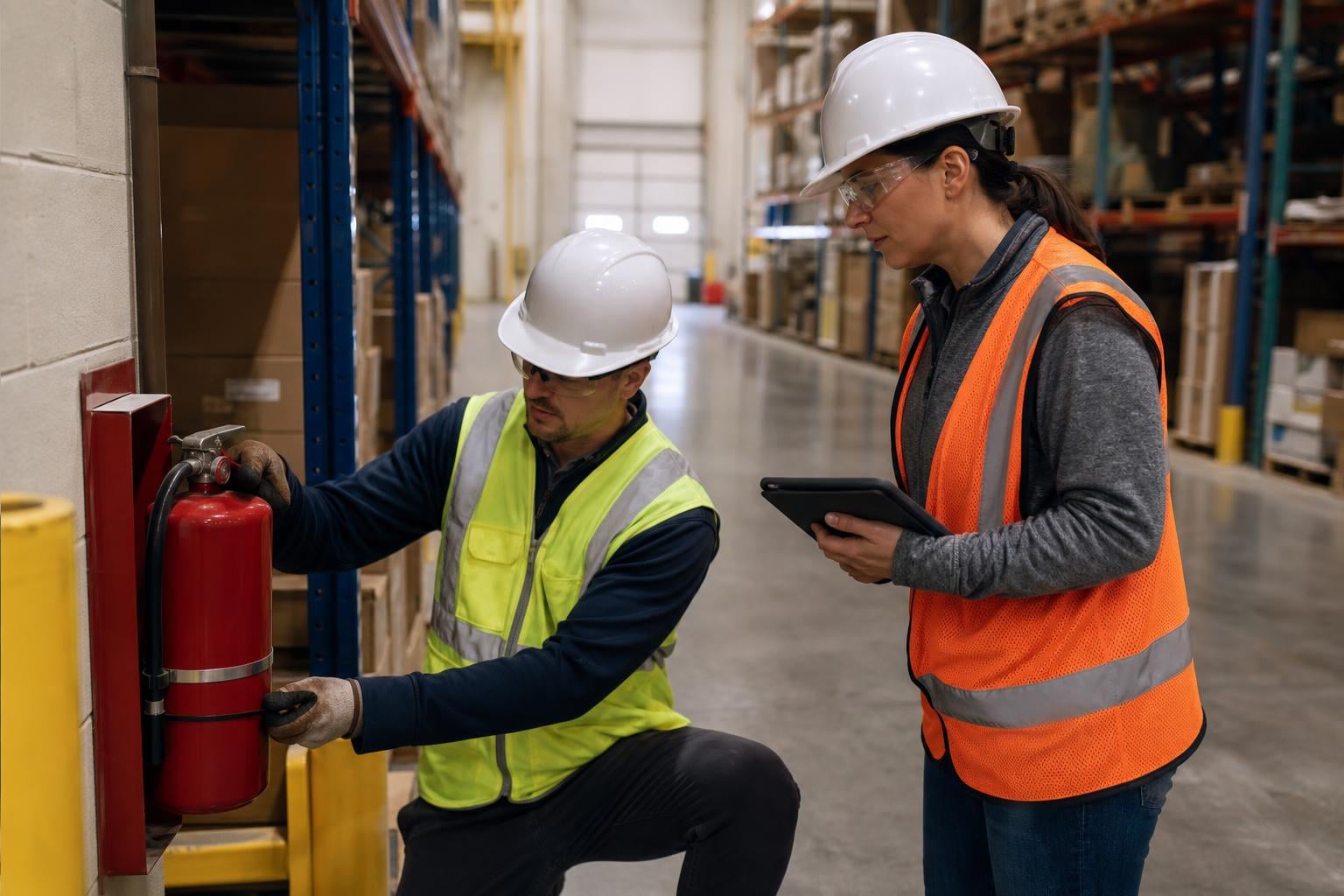
Phase 3: Site Walkthrough (Physical Hazard Identification) A thorough, physical wall-to-wall evaluation of the jobsite or facility. The consultant documents field execution, physical hazards, machinery guarding, PPE usage, and housekeeping metrics through notes, precise measurements, and photographic evidence.
Phase 4: Closing Conference (Risk-Prioritized Action Plan) Findings are presented to executive management. Identified hazards are mapped to their matching regulatory standard codes and compiled into a dynamic corrective action plan prioritized by risk severity so that the highest-exposure dangers are abated first.
The Employee Interview: The Phase Most Employers Overlook
OSHA doesn’t just inspect your facility. They talk to your people. During a real inspection, a CSHO will pull workers aside and ask about safety procedures, emergency response protocols, hazard awareness, and whether they’ve received required training.
This is where many employers get burned. One widely cited practitioner estimate suggests that roughly 80% of all OSHA citations resulting in fines originate from employee interviews. Whether that precise number holds across every industry, the underlying point is well established: an alarming share of citations come from what employees and supervisors tell the inspector, not from what the inspector sees.
The problem is what practitioners call the “paperwork looks good but workers don’t know” gap. Your written programs might be thorough and current, but if your crew can’t articulate the basics of your fall protection plan or doesn’t know where the SDS binder is located, that’s a citation.
A thorough mock OSHA inspection in Charlotte should include employee interviews that test whether OSHA-required training has actually transferred into worker knowledge, not just whether it was documented.
For Charlotte construction employers with Spanish-speaking crews, this phase is especially important. Bilingual mock inspections ensure that employee interviews accurately capture worker knowledge without language barriers creating false negatives. ESR’s Charlotte office staffs bilingual EN/ES safety professionals who can conduct interviews in the language workers are most comfortable with.
Key Regulatory and Enforcement Terms Charlotte Employers Need to Know
North Carolina State Plan
This is the single most important regulatory fact Charlotte employers miss. North Carolina is one of 22 states that operate their own OSHA-approved state plan. That means federal OSHA does not directly enforce workplace safety standards in Charlotte. Instead, the NC Occupational Safety and Health Division (NC OSH), housed within the NC Department of Labor (NCDOL), handles inspections and enforcement.
NC OSH standards must be “at least as effective” as federal OSHA standards, and in practice they closely mirror them. But the enforcement apparatus, inspection priorities, and penalty structures are state-controlled.
Why this matters for mock OSHA inspections in Charlotte NC: Your consultant needs to know NC-specific enforcement patterns, not just federal standards. The Charlotte field office is one of five NC OSH enforcement offices (alongside Asheville, Raleigh, Wilmington, and Winston-Salem), and it actively conducts both programmed and unprogrammed inspections across the metro area.
NC Penalty Alignment (October 2022)
Many Charlotte employers were caught off guard when North Carolina’s maximum OSHA penalties more than doubled on October 1, 2022. Tucked within legislative changes were provisions that substantially increased NC OSHA’s ability to levy stiffer penalties and gave the agency a longer timeframe to conduct inspections and issue citations. Since January 2023, NC penalties have increased annually to match federal OSHA maximums.
Effective July 1, 2025, North Carolina minimum and maximum civil penalties associated with occupational safety and health standard violations increased again, in accordance with the Consumer Price Index.
OSHA Citation Types and 2025/2026 Penalty Amounts
Understanding the classification of violations helps you prioritize findings from your mock inspection:
Serious Violation: A hazard that could cause death or serious physical harm. Maximum penalty: $16,550 per violation (2025, carrying forward into 2026).
Willful Violation: The employer knew about the hazard and intentionally made no effort to fix it, or showed plain indifference to employee safety. Maximum penalty: $165,514 per violation, with a minimum of $11,524 even after all adjustments.
Repeat Violation: Same or substantially similar violation within a five-year lookback window. Same maximum as willful: $165,514.
Failure-to-Abate: Failing to correct a previously cited hazard by the deadline. Penalty: $16,550 per day past the abatement deadline. This compounds fast. A ten-day delay on a single violation becomes $165,500.
Other-Than-Serious Violation: A hazard that would not ordinarily cause death or serious harm. Maximum: $16,550 per violation.
If you’ve already received a citation, understanding the 4-step citation response process is critical for protecting your rights.
2026 Penalty Freeze
OSHA announced there will be no inflation adjustment for 2026. The reason: the federal government shutdown in fall 2025 prevented the Bureau of Labor Statistics from publishing the October 2025 CPI-U data that the law requires for calculating annual adjustments. Because the statute allows no alternative calculation method, the 2026 adjustment was cancelled entirely. The 2025 penalty maximums carry forward unchanged.
Penalty Reduction Factors
Not every violation results in the maximum penalty. OSHA applies reductions based on several factors:
Employer size: Reductions of 10% to 60% for employers with fewer than 250 employees
Good faith: Up to 25% reduction for employers with effective, documented safety programs
Clean inspection history: A 20% reduction for employers who have never been inspected or who had no serious, willful, or failure-to-abate violations in the previous five years (per OSHA’s July 2025 revised policy)
A mock OSHA inspection directly supports the “good faith” reduction. Documenting that you voluntarily assessed your workplace and corrected hazards is powerful evidence of a genuine safety commitment.
General Duty Clause
Section 5(a)(1) of the OSH Act, the General Duty Clause, is OSHA’s catch-all provision. It requires employers to provide a workplace free from recognized hazards likely to cause death or serious physical harm, even when no specific standard covers the hazard. NC OSH uses this clause frequently. For a deeper explanation, see this General Duty Clause overview.
Programmed vs. Unprogrammed Inspections
Programmed inspections are planned in advance based on targeting criteria: high-hazard industries, injury rate data, or national emphasis programs (like the current focus on falls, heat illness, and trenching).
Unprogrammed inspections are triggered by specific events: worker complaints, referrals from other agencies, fatalities, hospitalizations, or media reports. These are the inspections employers fear most because they arrive without warning.
A mock inspection prepares you for both types.
Informal Conference
After receiving a citation, employers have 15 business days to request an informal conference with the OSHA area director (or NC OSH equivalent). This is a negotiation opportunity where penalties can often be reduced 30% to 50%, citation classifications can be adjusted, and abatement deadlines can be extended. Many employers don’t realize this window exists or how effective it can be.
CSHO (Compliance Safety and Health Officer)
The inspector. CSHOs are trained federal or state employees who carry credentials authorizing them to enter workplaces and conduct inspections. In North Carolina, these are NC OSH compliance officers operating out of the five field offices, including Charlotte.
Related Services: What’s What
Charlotte employers researching mock OSHA inspections often encounter overlapping terms. Here’s what each one means and how it differs.
OSHA On-Site Consultation Program vs. Private Mock Inspection
The federal government offers a free, confidential consultation program primarily for small and medium-sized businesses. These consultations help employers identify hazards and improve safety programs, and they are separate from enforcement, meaning they don’t result in citations.
However, there are trade-offs:
Factor | Private Mock Inspection | OSHA On-Site Consultation |
|---|---|---|
Cost | Fee-based (varies by provider) | Free |
Confidentiality | Fully private, no government record | Confidential but a government record exists |
Wait time | Typically scheduled within days to weeks | Can take weeks or months |
Obligation to fix | No legal obligation | Must correct serious hazards within consultant’s timeline |
Referral to enforcement | None | Failure to correct imminent dangers may be referred to enforcement |
Attorney-client privilege | Possible if directed by legal counsel | Not available |
Scope flexibility | Fully customizable | Standardized process |
The attorney-client privilege angle deserves attention. If a mock inspection is conducted at the direction of legal counsel in anticipation of litigation, the report may receive attorney-client privilege protection. This provides a stronger confidentiality shield than the consultation program can offer. Discuss this with your attorney before scheduling the inspection if litigation is a concern.
Safety Audit
Broader than a mock OSHA inspection. A safety audit evaluates your entire safety management system, including organizational culture, management commitment, employee engagement, and continuous improvement processes, not just compliance with specific OSHA standards. A mock inspection is one component of a comprehensive audit.
Safety Program Assessment
Evaluates whether your safety management system is functioning as designed. This goes beyond checking compliance boxes and examines how safety is integrated into daily operations, leadership accountability, and whether your safety programs deliver measurable ROI.
Site-Specific Safety Plan (SSSP)
A written plan required by many general contractors before subcontractors can mobilize on a project. SSSPs are one of the most common documentation gaps revealed during mock inspections on construction sites. If your SSSP is missing, outdated, or generic, that’s a finding your mock inspection should catch.
Activity Hazard Analysis (AHA)
A task-level hazard analysis that identifies the hazards associated with specific work activities and prescribes controls. AHAs are standard requirements on construction projects and frequently found to be incomplete or absent during mock inspections.
OSHA’s Top 10 Most Cited Violations (FY 2025)
Rank | Standard Code | Regulatory Focus Area | Final FY 2025 Violations |
1 | 1926.501 | Fall Protection (General Requirements) | 6,992 |
2 | 1910.1200 | Hazard Communication | 3,010 |
3 | 1926.1053 | Ladders | 2,842 |
4 | 1910.147 | Lockout/Tagout (Control of Hazardous Energy) | 2,562 |
5 | 1910.134 | Respiratory Protection | 2,294 |
6 | 1926.451 | Scaffolding | 2,286 |
7 | 1926.503 | Fall Protection (Training Requirements) | 2,216 |
8 | 1910.178 | Powered Industrial Trucks (Forklifts) | 2,150 |
9 | 1926.102 | Eye and Face Protection | 1,965 |
10 | 1910.212 | Machine Guarding (General Requirements) | 1,498 |
These are the standards that generate the most citations nationwide. A good mock OSHA inspection in Charlotte NC should check every one of them, plus NC-specific patterns.
*Specific citation counts for ranks 3 through 10 vary by reporting period.
Fall protection has held the top spot for 15 consecutive years. For historical context on how these rankings have shifted, see this 2022 OSHA violations breakdown.
NC-specific patterns: In North Carolina, the top cited serious construction violation was fall protection in residential construction (1926.501(b)(13)) with 538 total violations, followed by eye and face protection (1926.102(a)(1)) at 285 violations. Charlotte’s active residential and commercial construction market means these standards deserve extra attention during any mock inspection. Note that OSHA’s final rule on PPE fit requirements adds another layer of compliance to track.
Charlotte-Specific Enforcement Context
NC OSH FY 2024 Enforcement Data
The numbers from North Carolina’s FY 2024 FAME (Federal Annual Monitoring Evaluation) Report paint a clear picture of an active enforcement environment:
1,675 inspections completed, hitting 98.5% of the agency’s target
Workplace fatalities dropped 33%, from 72 to 48
Injury and illness rates ran 19% below the national private-sector average
Penalty retention rate of 84.44%, well above the national average
That last number is significant. A penalty retention rate above 84% means NC OSH collects the vast majority of fines it issues. Employers who contest citations in North Carolina don’t get the same level of relief they might expect in some other states.
Charlotte Field Office Activity
The NC DOL lists fatality inspections by field office, and Charlotte maintains its own dedicated enforcement presence. With Charlotte’s construction boom showing no signs of slowing, the probability of inspection on any given project is elevated compared to less active markets.
A Local Enforcement Example
The consequences of non-compliance are not abstract. Companies building an apartment complex in Charlotte’s SouthPark area that caught fire, killing two workers, were cited for violations of the Occupational Safety and Health Act of North Carolina. Fines totaled more than $50,000. Violations included failing to provide free and unobstructed egress and having no emergency response plan or alarm system in place.
A mock OSHA inspection in Charlotte NC would have flagged both of those conditions. The cost of the inspection is a fraction of the fines, and it doesn’t account for the human cost, the project delays, or the litigation exposure.
Timeline: The Evolution of North Carolina OSHA Penalties
Understanding how local enforcement arrived at current standards helps clarify your financial exposure. Here is how the NC state plan shifted to mirror federal strictness:
October 2022 | NC Penalty Escalation Bill Passed North Carolina passes legislation aligning state-level maximum safety violation penalties with federal statutory structures after decades of lower state-level maximum caps.
January 2023 | Annual CPI Adjustments Codified NC OSH begins automated annual index adjustments matching the Consumer Price Index shifts, creating a predictable escalating exposure matrix for uncorrected local workplace hazards.
July 2025 | Regional Enforcement Peak NC OSH updates the Field Operations Manual (FOM), expanding safety audit metrics and adjusting small business history calculation formulas to prioritize regional field offices like Charlotte.
January 2026 | Federal & State Penalty Freeze Due to a late-2025 funding-based BLS reporting delay, the scheduled inflation scaling is paused. The penalty ceilings hold unchanged at 2025 levels ($16,550 for Serious / $165,514 for Willful) throughout the 2026 calendar year.
Who Should Conduct Your Mock Inspection?
Not all mock inspections are created equal. The quality of the assessment depends entirely on who’s doing it.
Mock OSHA inspections should be conducted by a qualified safety and health expert with an extensive background in OSHA compliance. Look for these credentials:
CSP (Certified Safety Professional): The gold standard credential in the safety profession, requiring education, experience, and passing a rigorous exam
CHST (Construction Health and Safety Technician): Construction-specific certification for safety practitioners
OSHA 500/501: Instructor credentials that authorize teaching OSHA 10-hour and 30-hour outreach courses
NCCER (National Center for Construction Education and Research): Craft training accreditation particularly relevant for construction assessments
Practitioners consistently warn against relying on insurance company representatives for mock inspections. Their assessments often lack depth because the representatives may not have adequate backgrounds in evaluating OSHA compliance comprehensively. A mock inspection that only catches obvious problems doesn’t prepare your team for the real thing.
ESR’s Charlotte office staffs credentialed professionals (CSP, CHST, OSHA 500/501, NCCER instructors) with bilingual EN/ES capability, and charges no travel surcharge within 50 miles of the Charlotte office.
Ready to schedule a mock inspection? Connect with ESR’s Charlotte team to get a credentialed safety professional on your site.
How Often Should You Conduct a Mock Inspection?
The practitioner consensus is clear: conduct a mock OSHA inspection at least annually. Compare results year over year and track improvements. This creates a documented record of continuous safety improvement that supports the “good faith” penalty reduction and strengthens your position if an actual inspection occurs.
Beyond the annual cadence, consider scheduling additional mock inspections when:
Starting a new construction project or opening a new facility
Introducing new processes, equipment, or chemicals
Experiencing a workplace incident, near-miss, or employee complaint
Preparing for an ISNetworld or Avetta prequalification review
Receiving a tip-off that your industry is under a national or local emphasis program
Mock Inspection Cost vs. Citation Cost
Only one provider in the Charlotte market publicly discloses pricing, listing mock OSHA inspections starting at $2,250 for a half-day visit. Costs vary based on facility size, complexity, and the scope of the assessment.
Here’s the math that matters: a single serious violation carries a maximum penalty of $16,550. A mock inspection that catches even one violation before an inspector does pays for itself immediately. A willful violation at $165,514 makes the investment comparison almost absurd.
And penalties are only the beginning. Factor in abatement costs, increased workers’ compensation premiums, potential OSHA follow-up inspections, and the lost productivity from having your operations disrupted by an enforcement action.
Frequently Asked Questions
How long does a mock OSHA inspection in Charlotte take?
Small facilities or single-trade jobsites typically take one to two hours. Larger, more complex operations (multi-story construction, manufacturing plants, facilities with multiple hazard types) may require one to two full days for a comprehensive evaluation.
Is a mock OSHA inspection confidential?
Yes. Unlike OSHA’s free On-Site Consultation Program, a private mock inspection creates no government record. Findings stay between you and your consultant. If the inspection is directed by legal counsel in anticipation of litigation, the report may qualify for attorney-client privilege protection.
Does North Carolina follow federal OSHA standards?
North Carolina operates its own OSHA-approved state plan through the NC OSH Division. NC standards must be at least as effective as federal standards and closely mirror them. However, enforcement, inspections, and penalty administration are handled by the state, not federal OSHA. Charlotte has its own dedicated NC OSH field office.
What’s the difference between a mock inspection and the free OSHA consultation?
The free OSHA On-Site Consultation Program is government-run, targets small businesses, and requires you to fix serious hazards within a set timeline. There can be long wait times, and a government record of the visit exists. A private mock inspection offers full confidentiality, flexible scheduling, no obligation to fix findings (though you obviously should), and the option for attorney-client privilege protection.
What happens if I don’t fix issues found during a mock inspection?
There’s no legal obligation to correct findings from a private mock inspection. However, if a real OSHA inspector later finds the same hazards, the existence of a prior assessment documenting those conditions could undermine any “good faith” defense and potentially support a willful violation classification. Fix what you find.
Can a mock OSHA inspection help reduce penalties if I’m later cited?
Yes. OSHA allows up to a 25% penalty reduction for employers who demonstrate good faith through effective safety programs. Documented mock inspections, corrective action plans, and follow-through on fixes all serve as evidence of genuine commitment to safety. A clean five-year inspection history can earn an additional 20% reduction.
How much does a mock OSHA inspection cost in Charlotte?
Industry benchmarks start around $2,250 for a half-day visit, with costs increasing based on facility size and complexity. ESR does not publish pricing but provides custom quotes through their Request a Safety Pro intake form.
Should mock inspections be conducted in Spanish for bilingual crews?
For Charlotte construction sites with Spanish-speaking workers, bilingual mock inspections are strongly recommended. The employee interview phase, which drives a disproportionate share of OSHA citations, only produces accurate results when workers can communicate freely. ESR staffs bilingual EN/ES safety professionals for exactly this reason.