Key Takeaways
The Citation Source: A majority of OSHA citations stem directly from statements made during employee and management interviews rather than physical inspection evidence alone.
Management vs. Non-Management Rules: Non-management workers can be interviewed in private without an employer present; management statements automatically bind the company legally and can justify Willful citations.
Voluntary Participation: Non-management employees have the right to decline interviews, refuse to sign written statements, decline audio/video recordings, and request a representative or interpreter.
No Miranda Warnings: OSHA inspectors are not required to provide Miranda advisories, making pre-inspection rights training essential for field workers and supervisors.
Avoid Last-Minute Corrections: Visibly fixing a hazard while an inspector is on site can be used as evidence of prior knowledge, escalating serious violations to willful penalties up to $165,514.
TL;DR
The OSHA employee interview process is the phase of a workplace inspection where a Compliance Safety and Health Officer (CSHO) privately questions workers about job duties, training, and hazard awareness. A majority of OSHA citations stem from these interviews. Non-management employees can be interviewed privately without the employer present, while management interviews allow company counsel to attend. Every employee has the right to refuse the interview, request an interpreter, and decline to sign a written statement.
What Is the OSHA Employee Interview Process?
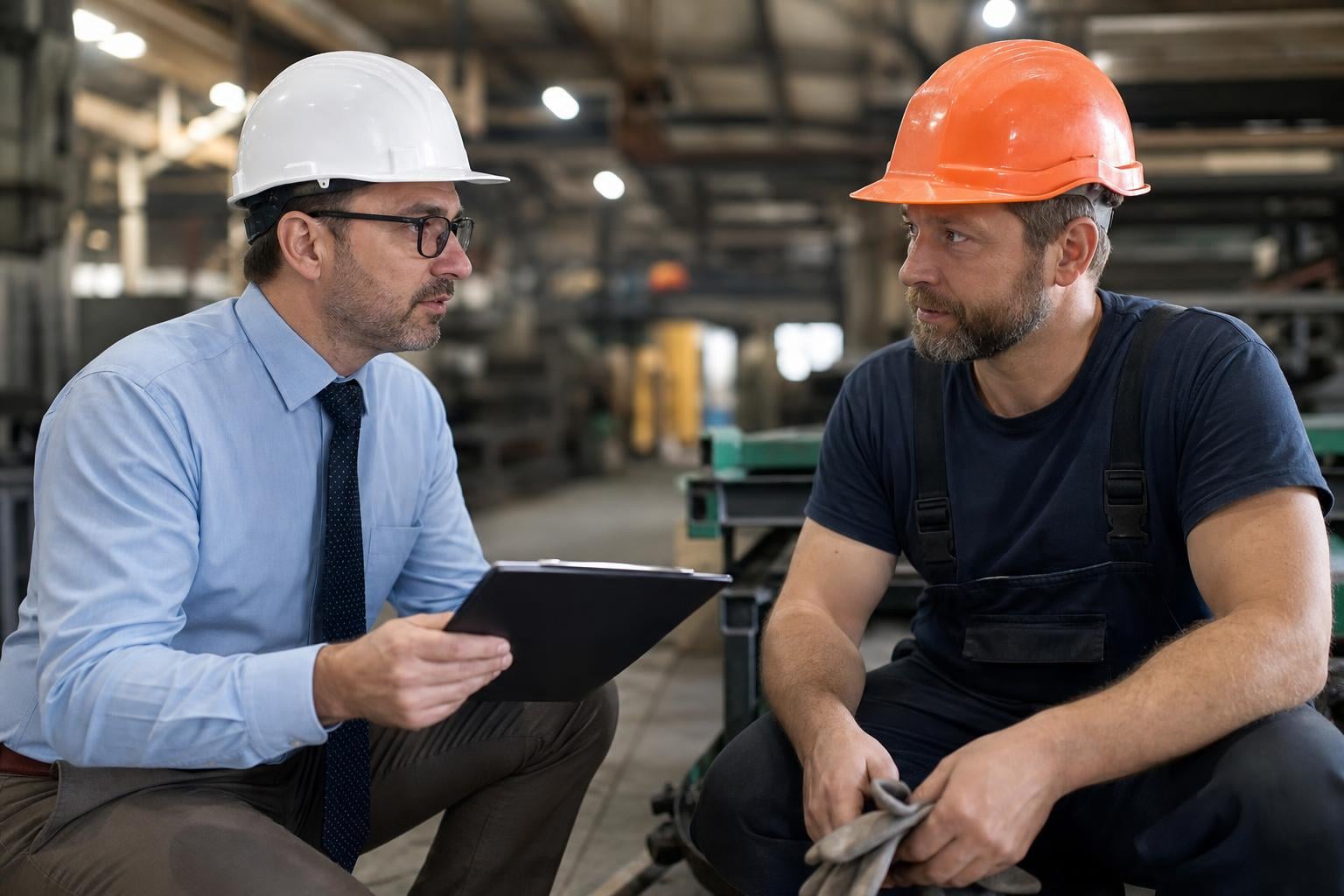
The OSHA employee interview process is the structured questioning of employees by a Compliance Safety and Health Officer during a workplace inspection. Authorized under Section 8(a)(2) of the OSH Act, it gives CSHOs the statutory right to question any employee privately during regular working hours or at other reasonable times in connection with the inspection.
The interview sits within a broader inspection sequence: opening conference, walkaround of the worksite, employee interviews, document and records review, and closing conference. Of these phases, the employee interview is arguably the most consequential. It is generally recognized that a majority of OSHA citations are based on statements made during management and employee interviews, not on photographs, measurements, or records alone.
Legal Authority Behind OSHA Employee Interviews
Two primary sources govern how the OSHA employee interview process works in practice:
The OSH Act, Section 8(a)(2): Grants CSHOs the authority to question privately any employer, owner, operator, agent, or employee during the course of an inspection.
OSHA’s Field Operations Manual (FOM), Chapter 3: Details interview procedures, including how CSHOs should identify themselves, what they must explain to employees, and when they can request recordings.
How the Interview Process Works Step by Step
The CSHO identifies themselves: Shows credentials and provides a business card.
The inspector explains the purpose: Outlines that the interview is meant to gather factual information relevant to a safety and health inspection.
Anti-retaliation protections are disclosed: Informs the employee about protections under Section 11(c) of the OSH Act.
Confidentiality is discussed: Clarifies that statements remain confidential to the extent permitted by law.
The substantive interview begins: Questions cover job duties, training history, knowledge of hazards, and injury history.
A written statement may be requested: CSHOs may ask for a signed summary; employees have the right to decline signing.
Recording requires consent: Audio or video recording requires explicit consent from the employee.
Management vs. Non-Management Employees: The Critical Distinction
Factor | Non-Management Employees | Management / Supervisory Employees |
Private Interview | OSHA’s statutory right | Subject to employer’s right to have counsel present |
Employer Attendance | No (unless employee explicitly invites them) | Yes |
Company Attorney Attendance | No (unless employee explicitly invites them) | Yes |
Statements Bind Company | Generally no | Yes (can support Willful citations) |
Employee Can Refuse | Yes | Yes (though OSHA can issue administrative subpoenas) |
Exposure Level | Low personal liability | High exposure (statements establish employer knowledge) |
The Walkaround Statement Trap
OSHA can rely on statements made by management at any time during the inspection—not just during formal interviews. Offhand comments made by site superintendents during a walkaround (e.g., “We’ve been meaning to fix that guardrail”) create immediate evidence of employer knowledge. This single remark can transform a Serious citation ($16,550 max) into a Willful violation carrying penalties up to $165,514.
Employee Rights During the OSHA Interview Process
Employees maintain specific legal rights during interviews:
Right to refuse the interview entirely or end it at any time.
Right to demand an interpreter if English is not their primary language.
Right to request a representative (union steward, personal attorney, or coworker).
Right to decline signing written statements or providing personal contact information.
Right to decline audio or video recording.
The No-Miranda Reality
Unlike criminal law enforcement, OSHA interviews do not come with Miranda warnings. There is no advisory about the right to remain silent or self-incrimination warnings. However, supervisory comments during these informal conversations can directly support civil enforcement fines or criminal prosecution risk for severe violations.
Bilingual Workforce Considerations
Under the FOM, CSHOs must evaluate whether an employee’s English comprehension is sufficient for an effective interview. If not, the inspector must utilize telephone interpretation services. Employees have the absolute right to demand a competent interpreter and may decline the interview if forced to proceed without one.
Common Mistakes During OSHA Employee Interviews
Managers talking freely during walkarounds: Voluntarily offering background details on known hazards or delayed repairs.
Failing to inform employees of their rights: Leaving workers unaware that participation is voluntary and they can request representatives.
Fixing hazards while OSHA watches: Visibly making corrections during an active walkthrough proves prior knowledge of the defect, risking Willful citation upgrades.
Skipping post-interview debriefings: Neglecting to conduct voluntary, non-coercive debriefs with workers to understand what information OSHA gathered.
Frequently Asked Questions
Can an employer sit in on an OSHA employee interview?
For non-management employees, no. OSHA has the statutory right to conduct these interviews in private. The employer, company attorney, and management representatives are excluded unless the employee personally invites them. For management-level employees, the employer can have counsel or a company representative present.
Can employees refuse to be interviewed by OSHA?
Yes. The interview is voluntary. Employees can decline to participate, refuse to answer specific questions, stop the interview at any time, and decline to sign a written statement. However, OSHA can issue an administrative subpoena to compel participation if the testimony is deemed necessary.
Does OSHA read employees their Miranda rights?
No. OSHA inspectors are not law enforcement officers, and the employee is not in custody, so Miranda warnings do not apply. Despite this, statements made during the interview can be used as evidence in civil enforcement actions and, for supervisors, even criminal proceedings.
What questions does OSHA ask during employee interviews?
Inspectors typically ask about job duties, training history, knowledge of workplace hazards, whether safety concerns have been reported, injury and near-miss history, and the employee’s familiarity with the company’s safety programs.
Can OSHA expand an inspection based on what an employee says?
Yes. The FOM specifically allows CSHOs to broaden the scope of a partial inspection if employee interviews reveal evidence of potential violations in other parts of the workplace.
How should employers prepare for the OSHA employee interview process?
Hold periodic briefings so employees understand their rights. Review safety documentation and training records. Designate a company representative to manage the inspection. Prepare managers separately, emphasizing that their statements bind the company. Consider running a mock inspection that includes interview practice.
What is the timeline after OSHA interviews employees?
OSHA has six months from the date of the inspection to issue citations. The analysis period, during which the compliance officer reviews interview notes, photographs, and records, typically takes several weeks. It can be months before an employer hears anything after the closing conference.
If your organization needs help preparing for the OSHA employee interview process or responding to citations that resulted from one, OSHA compliance consulting can provide the structured support your team needs.